
The Hidden Risks and Costs of Neglecting Commercial Storm Drain Maintenance
September has put Florida’s commercial stormwater systems to work, with heavy rainfall exposing drainage problems that may be less noticeable during drier periods. Commercial storm drain maintenance helps keep those systems functioning as intended and can address developing issues before they become larger property concerns.
This September, that has been especially apparent in South Florida. Fort Lauderdale and West Palm Beach have recorded well-above-normal rainfall, while Miami has also experienced significant rain events—even though its month-to-date total has been closer to historical norms. The differences remind us that rainfall can vary considerably from one Florida market, or even one property, to another.
For commercial property and facility managers, the more important question isn’t how much rain fell across the region. It’s what happened at your property when it did.
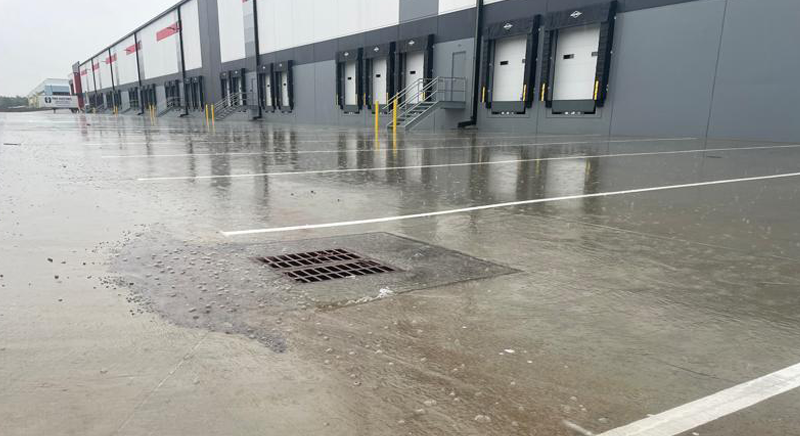
Standing water, slow drainage, overflowing catch basins, erosion and recurring trouble spots can all be signs that a stormwater system needs attention. And the cost of neglected storm drain maintenance doesn’t always show up in the storm drain.
When Commercial Storm Drain Maintenance Becomes a Property Issue
Storm drains are easy to overlook when they’re doing their job. But sediment, leaves, trash and other debris accumulate over time, reducing the system’s ability to collect and move water away from the property.
The effects may first appear somewhere else—a puddle that takes longer to disappear, a pothole that keeps getting worse, erosion along a landscaped area or water collecting near an entrance. Left unaddressed, what began as routine storm drain maintenance can contribute to larger property, operational and financial concerns.
Standing Water Can Become a Pavement Problem
A drainage problem doesn’t necessarily stay a drainage problem.
When storm drains or catch basins cannot move water efficiently, water can remain on parking lots, drive lanes and other paved areas longer than intended. Over time, water can penetrate cracks and weakened areas in pavement, contributing to deterioration, potholes and more extensive repairs.
Poor drainage can also cause erosion along pavement edges, landscaped areas and other parts of the site as water repeatedly follows paths it wasn’t designed to take.
For commercial properties, that can turn a routine maintenance issue into a larger repair expense—and create additional concerns for vehicles, pedestrians and access to the property.
What to watch for: recurring puddles or ponding, new or worsening pavement cracks, potholes, washed-out areas, or water consistently collecting in the same locations after a storm.
Erosion Can Affect More Than Landscaping
Stormwater should be collected and directed away from buildings, pavement and other critical areas of a property. When drainage is obstructed, or water repeatedly flows where it shouldn’t, the effects may extend beyond a soggy landscape bed.
Repeated runoff can displace soil, expose roots, undermine pavement edges and wash away landscaped areas. Persistent drainage problems near structures can also contribute to soil saturation or erosion around foundations and other site infrastructure.
The damage may develop gradually, which makes the underlying drainage issue easy to miss. By the time erosion becomes obvious, correcting it may involve more than cleaning a storm drain—it can require landscape restoration, pavement work or other site repairs.
What to watch for: soil washout, exposed roots, channels forming through landscaped areas, sinking or uneven pavement edges, and recurring erosion after heavy rain.
Planned Maintenance Can Become Emergency Service
Storm drain cleaning is much easier to manage when it is part of a planned maintenance program. The timing can be scheduled, problem areas can be addressed proactively, and the work can be coordinated around normal property operations.
A drainage problem discovered during heavy rainfall is a different situation.
When water begins backing up, pooling around entrances or affecting parking and drive areas, the priority shifts from routine maintenance to restoring drainage as quickly as possible. Emergency response can mean unplanned service costs, disruption to the property and less flexibility in when and how the work is performed.
Regular inspection and cleaning cannot prevent every drainage problem, but it can help identify accumulated debris, sediment and other issues before the next storm puts the system to the test.
What to watch for: drains that only become problematic during heavy rain, catch basins that fill quickly, recurring calls for the same drainage issue, or storm drain maintenance that is primarily reactive rather than scheduled.
Drainage Problems Can Disrupt Property Operations
The cost of a drainage problem isn’t limited to the repair itself.
Standing water or localized flooding can affect parking spaces, entrances, sidewalks, loading areas and drive lanes. For tenants, customers, employees and vendors, that can make getting into or around a property more difficult. For property teams, it can mean responding to complaints, redirecting traffic, restricting access or coordinating emergency services while the property is operating.
At retail, office, healthcare, hospitality, industrial and multifamily properties, even a relatively localized drainage issue can create an outsized operational headache if it occurs in the wrong place.
What to watch for: water collecting near entrances or pedestrian routes, inaccessible parking spaces, drainage problems around loading areas, or recurring areas that require cones, barricades or other temporary measures after storms.
What Leaves Your Property Matters, Too
Stormwater doesn’t simply disappear when it enters a drain.
As rain moves across parking lots, roadways, landscaped areas and other surfaces, it can pick up sediment, trash, oils, fertilizers and other pollutants. Those materials can enter stormwater systems and ultimately reach canals, lakes, rivers and coastal waters.
Keeping drains and catch basins maintained can help remove accumulated debris and sediment before it is carried farther through the system. For commercial properties, stormwater maintenance is therefore not only about drainage performance—it can also be part of responsible property operations and broader sustainability efforts.
What to watch for: visible sediment or trash in catch basins, debris collecting around drains, erosion carrying soil into the drainage system, or evidence of oils and other contaminants near drainage areas.
Deferred Maintenance Can Become a Capital Expense
This is where the hidden costs begin to add up.
A storm drain cleaning is a maintenance activity. Pavement replacement, erosion remediation, landscape restoration, drainage-system repairs and repairs to other affected site infrastructure are different kinds of expenses entirely.
Not every pothole or drainage problem is caused by a clogged storm drain, and routine cleaning cannot eliminate every stormwater issue. But allowing known drainage problems to continue can contribute to deterioration elsewhere on the property.
For owners and property managers, the goal is to identify and address smaller maintenance needs before they have the opportunity to become larger repair projects.
What to watch for: the same drainage problems returning after every major rain event, increasing pavement or landscape repairs around problem areas, aging drainage infrastructure, or maintenance that continues to be postponed because the system appears to work during dry weather.
What Is Your Property Telling You?
Heavy rain provides a real-world test of a commercial property’s stormwater system.
After a storm, take a look around. Did water drain as expected? Are certain areas still holding water? Are catch basins clear? Has erosion appeared or worsened? Are the same trouble spots coming back?
Those observations can help property teams identify where routine maintenance may be needed before the next heavy rainfall.
GreenTeam provides commercial storm drain cleaning and stormwater services throughout Florida, helping property managers, facility managers and owners maintain drainage systems and address problem areas before they become larger concerns.
Seeing signs of a drainage problem?
GreenTeam can help with routine commercial storm drain cleaning, preventative maintenance and drainage problems throughout Florida.


