
Pipe Lining or Pipe Replacement? What Commercial Property Managers Should Consider
When the same sewer line keeps sending crews back after hours, it’s time to look beyond the latest backup.
When a sewer line has a history of problems, property managers may need to consider a larger restoration. Pipe lining can be one option, but the right approach depends on the pipe’s condition, the site, and the work required to access and repair it.
Seeing the problem before digging
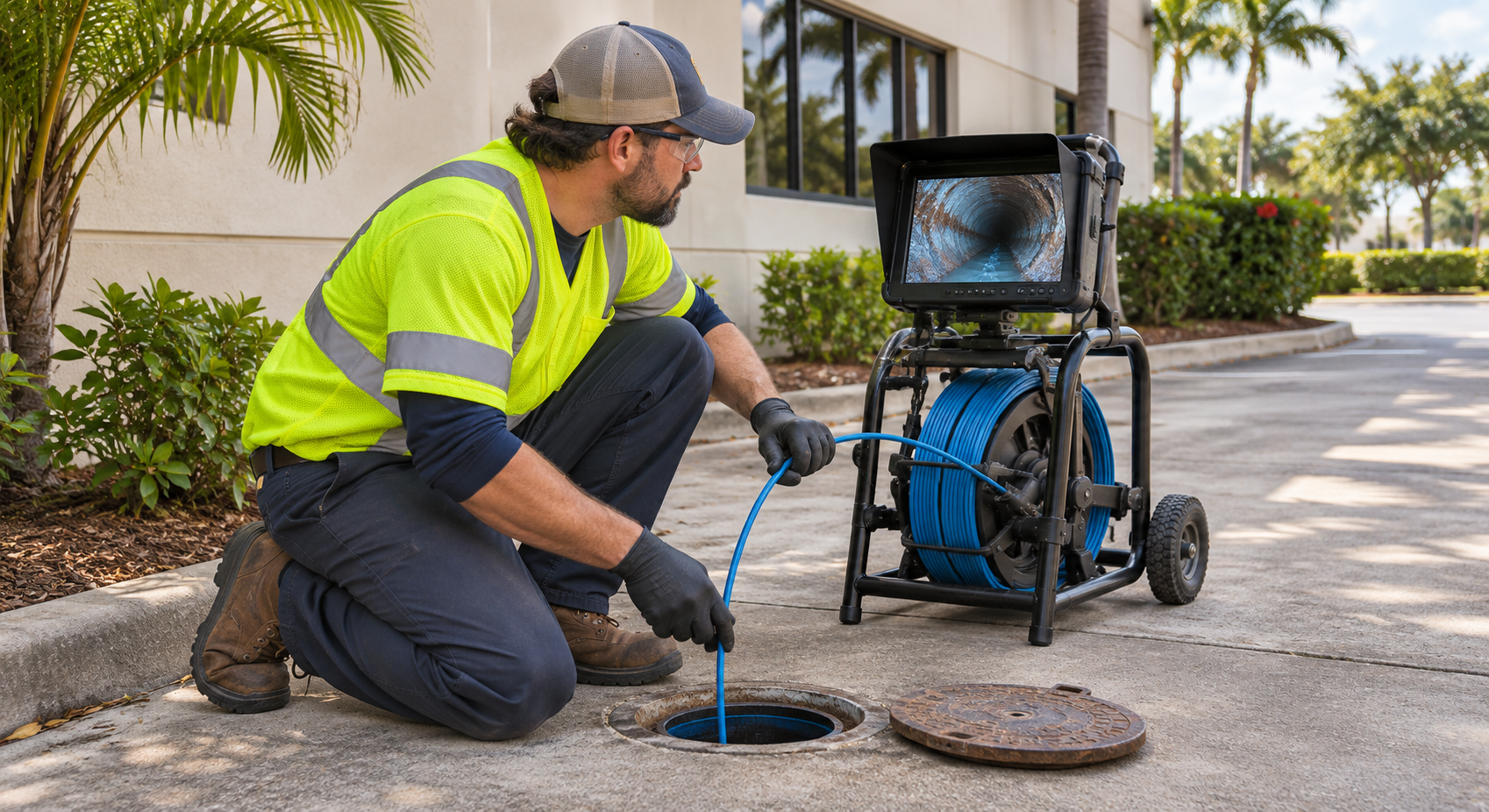
Traditionally, reaching a buried sewer line meant opening a trench. Today, a camera can travel through the pipe from an access point, letting the crew see where the problem is and assess the line before deciding on a repair. That view can save time in diagnosis, reduce guesswork, and help avoid digging in places that don’t need it.
If the pipe is a candidate for lining, the crew cleans and prepares it, installs a liner through an access point, and cures it inside the existing pipe. A camera inspection can then help review the completed work. That gives property teams a view of the process from diagnosis through repair.
Trenchless doesn’t mean no site work
Pipe lining is called trenchless because the repair happens inside the existing pipe, rather than requiring a trench along its full length. Access openings, concrete cutting, or targeted excavation may still be needed to reach and prepare the line.
The goal is to understand the whole job before work begins: what the camera inspection reveals, how the pipe can be repaired, and what access the site will require.
When might pipe lining make sense?
When an inspection finds damage and the pipe is suitable for rehabilitation, lining may let the crew repair it from inside the existing pipe. That can mean less excavation, especially when the line runs beneath paving, landscaping, or an active area of the property.
Whether lining is a fit depends on the pipe’s condition, layout, connections, access, and the repair needed. Ask the contractor to walk you through what the inspection showed and how it shaped the recommendation.
When might another repair be needed?
Lining is one option. The inspection may point to a different repair or replacement. Before approving the work, ask:
- What did the inspection find, and where?
- Why is this repair method the right fit?
- What access will the crew need?
- Could tenants, traffic, or operations be affected?
- How will connected lines be handled?
- What documentation will we receive afterward?
Plan around the property, too
The pipe is only part of the project. Confirm where crews will enter and stage equipment, which areas may need to be opened, whether service interruptions are expected, and what restoration is included. Ask for the work sequence so you can prepare tenants and coordinate building operations.
Choose the repair based on the assessment
Pipe lining can be a useful option for some commercial repairs, particularly when excavation would affect active areas. The inspection and site conditions should guide the decision.
Dealing with recurring sewer line problems?
GreenTeam can inspect the pipe and discuss commercial pipe lining and repair options for your property throughout Florida.
Commercial Pipe Lining and Repair Across Florida
GreenTeam works with commercial property teams across Florida to assess pipe problems and discuss repair options, including pipe lining. We serve properties in Miami, Fort Lauderdale, West Palm Beach, Naples, Orlando, Tampa, Jacksonville, Pensacola and surrounding communities.
Every site is different. A camera inspection can help show what’s happening inside the pipe and inform the next step. Learn more about GreenTeam’s commercial pipe lining and pipe repair services, or contact the team to discuss your property.


